How does the “shoot score” actually work?
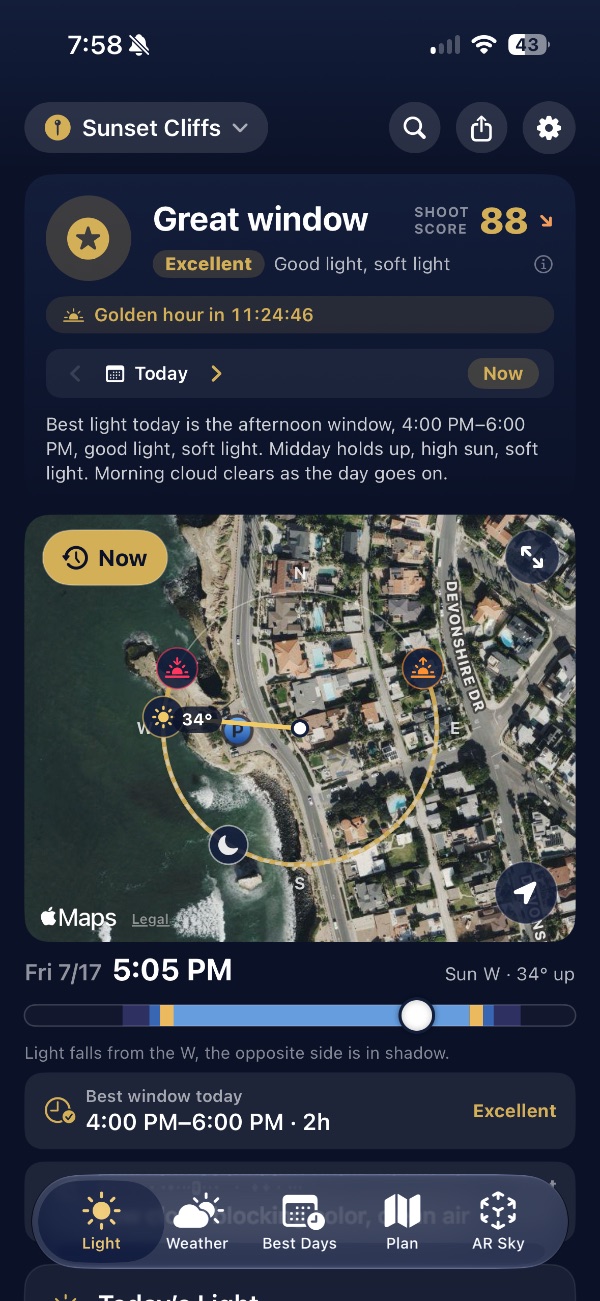
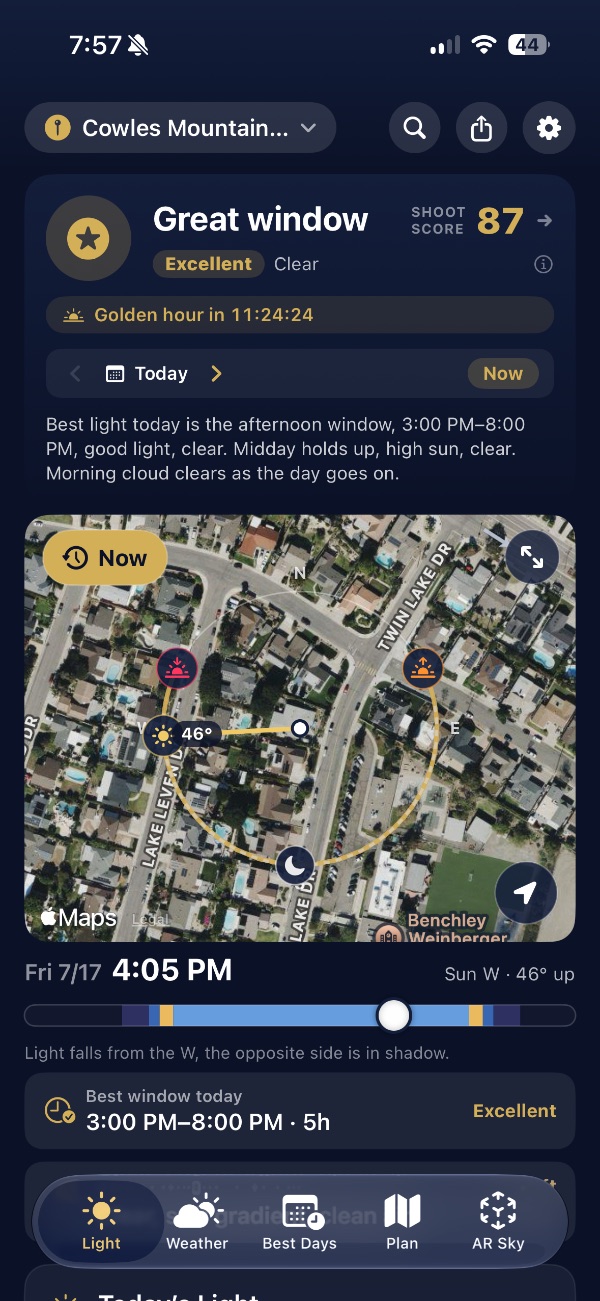
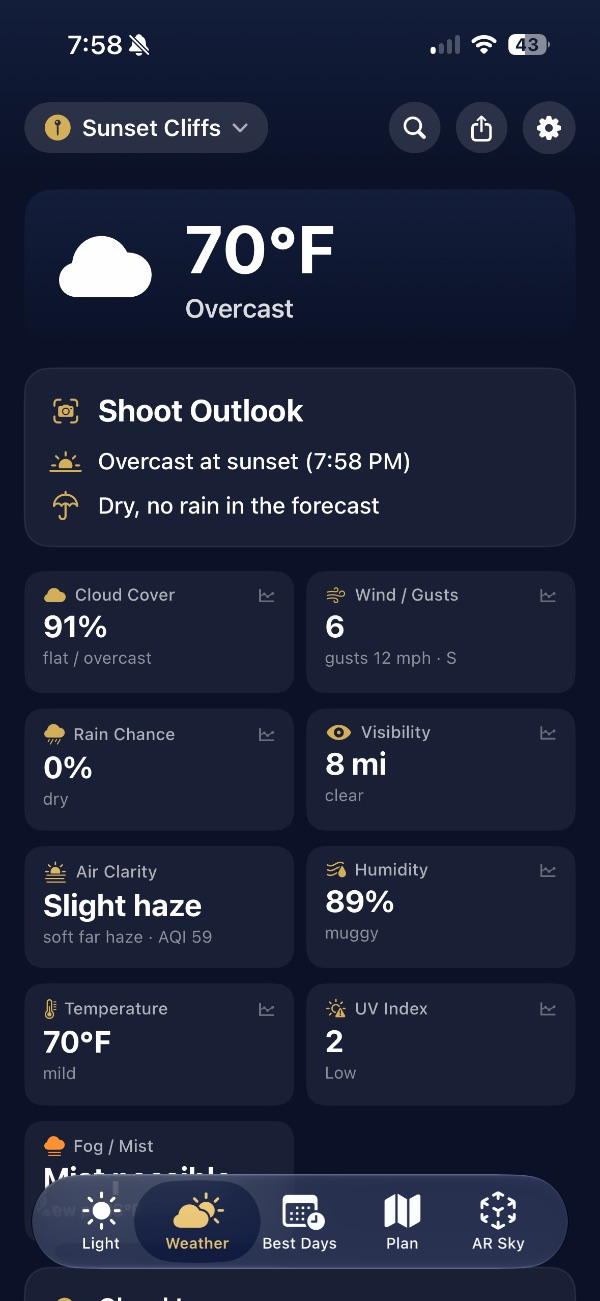
ShootLight fuses the sun's angle and path, golden & blue hour, cloud layers, wind, haze and air clarity, and a predicted sunset color into a single verdict (Don't bother, Workable, Good to shoot, or Great window) for that exact location and moment. It's not a generic weather rating; it's tuned to what actually makes light worth shooting.
Does it work offline?
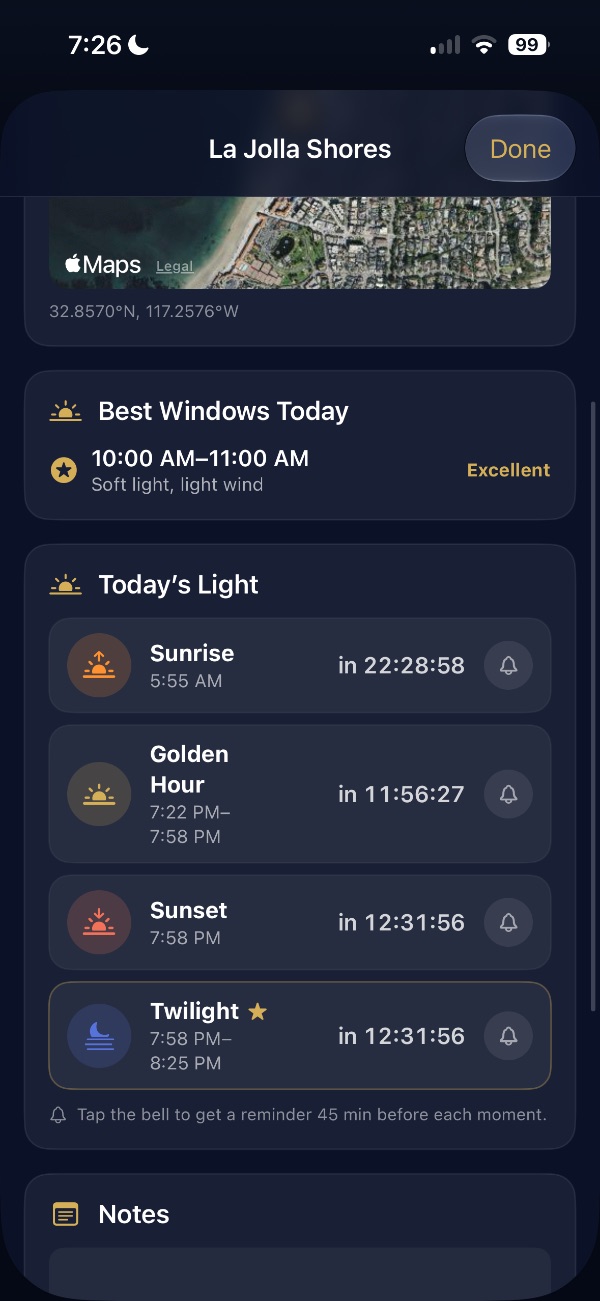
The light does. Sun and moon position, golden hour, blue hour, twilight, Shadow Mode, and Milky Way timing are all computed on your device with no signal, great for remote locations. Weather, radar, maps, and traffic-aware routing need a connection; your last weather fetch is cached, so recent conditions still show when you lose service.
Can I plan shoots months in advance?
Absolutely. Because the sun and moon are pure astronomy, ShootLight can tell you golden hour, the sun's path, and Milky Way position for any date and any location on Earth, perfect for planning a shoot months out. Weather-based scoring sharpens as the date approaches.
What's the difference between the map and AR Sky?
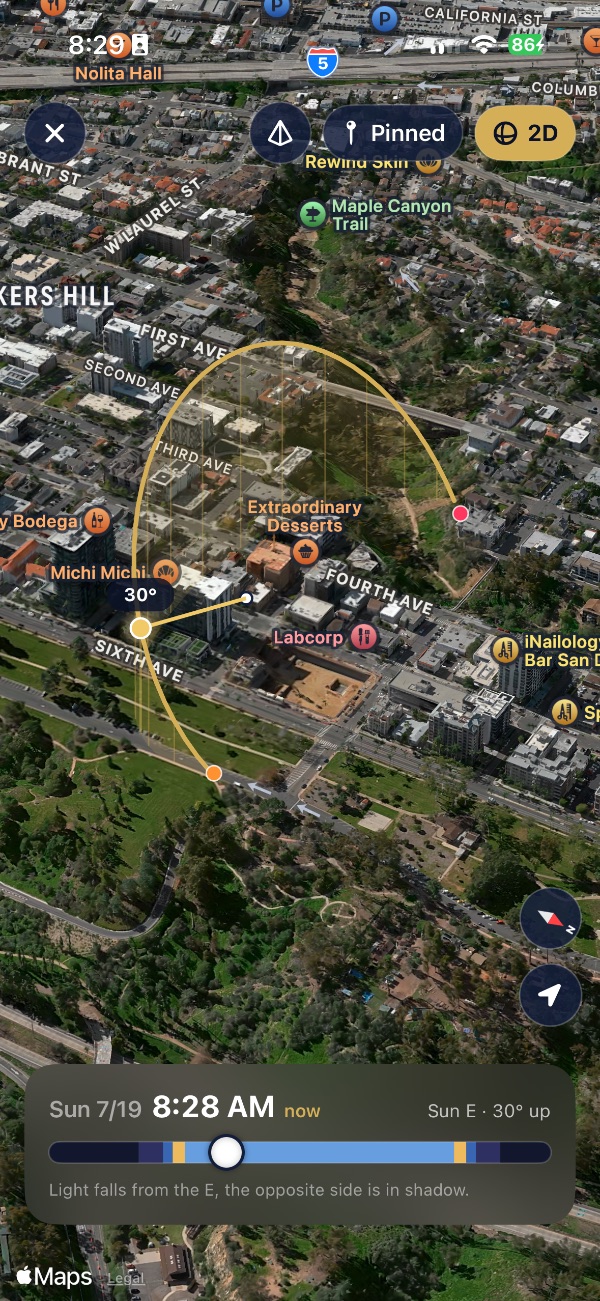
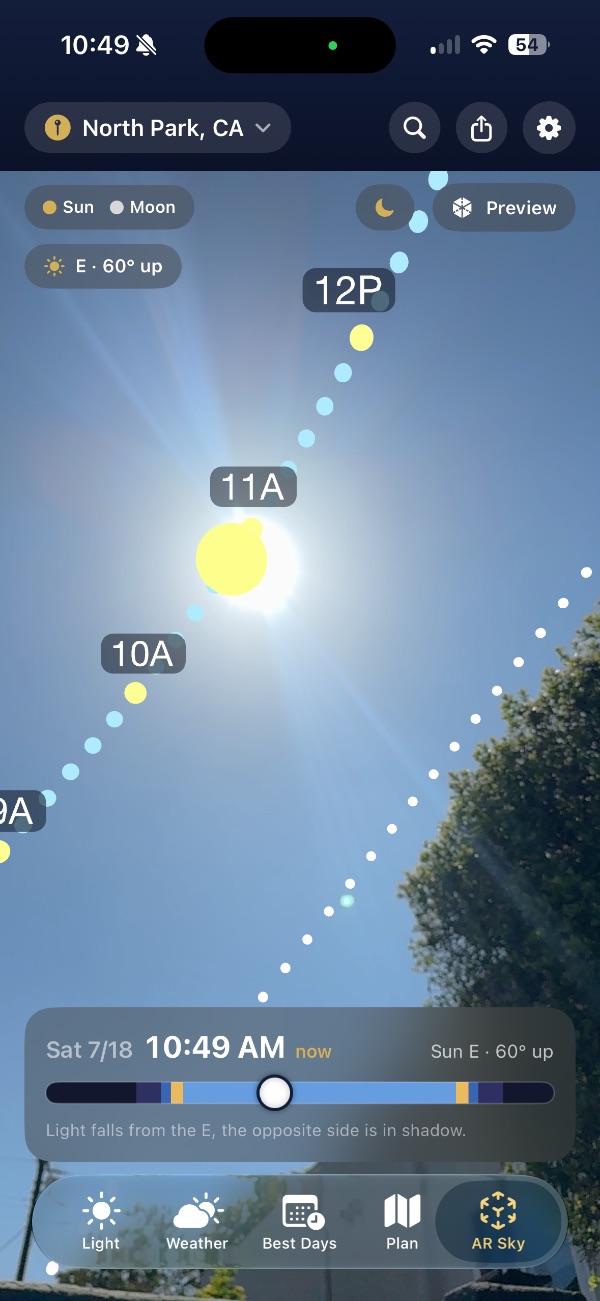
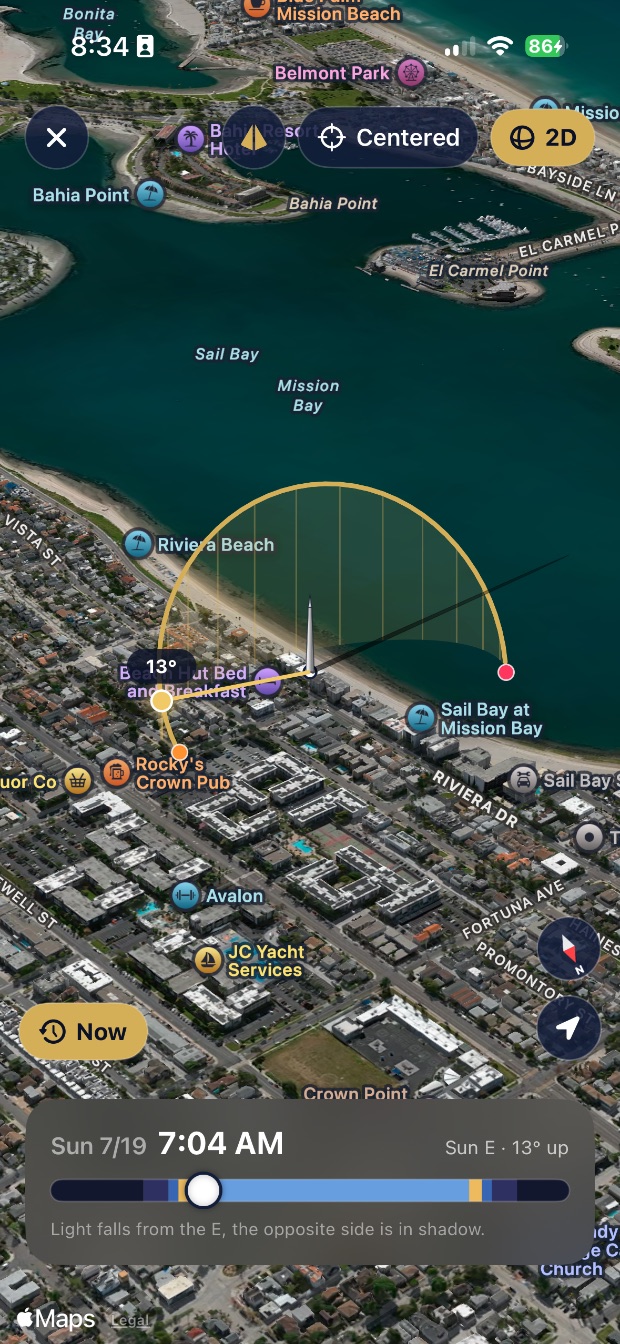
The live sun-path map traces the sun's arc from a top-down view of your location, with a time slider and 3D terrain. AR Sky lets you stand on location, raise your phone, and see the sun's path overlaid on the real scene in augmented reality, with hourly markers and the Milky Way core.
How much is it, and is there a subscription?
ShootLight is a one-time purchase of $9.99 on the App Store. No subscription, no in-app purchases, no ads. You buy it once, own it, and every future update is included.
Where do I get it, and what do I need?
ShootLight is on the
App Store now for iPhone, and needs iOS 17 or later. AR Sky uses your camera; everything else works without it.
How accurate is the sunset color forecast?
ShootLight predicts sunset quality (Soft, Vivid, or Fiery) from the mix of high, mid, and low cloud, air clarity, and where the sun sets relative to that cloud. Like any forecast it sharpens closer to the day, but it's built to answer the real question: is tonight worth staying for, or should you pack up?
Can it optimize a multi-stop shoot day?
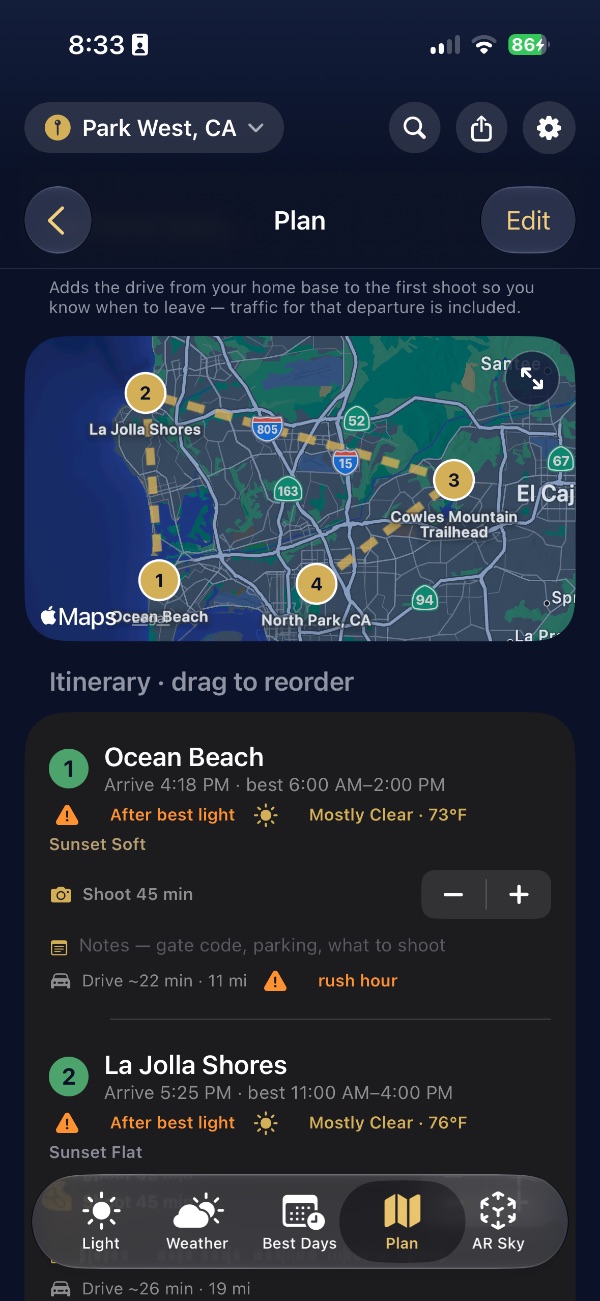
Yes, that's what Plan → Brief is for. Drop every location for the day and ShootLight sequences them either by best light (each stop lands in its peak window) or by fastest drive, with travel time, buffers, and breaks factored in. Every stop shows its own verdict and usable minutes of light.
What's in the exported PDF brief?
A clean, branded one-pager: call times, each location with coordinates, the light verdict and sun position per stop, golden/blue-hour timing, and your notes. It's designed so a producer can send it straight to a shooter, second unit, or client without any extra formatting.
Does AR Sky need a special phone or LiDAR?
No LiDAR required. AR Sky uses your iPhone's camera and motion sensors to overlay the sun's path on the real scene. Any iPhone on iOS 17+ can run it; newer phones just track a touch more smoothly.
How is this different from a golden-hour app?
A golden-hour app tells you when the light turns warm. ShootLight tells you whether it's worth showing up at all, fusing the sun with live cloud, wind, haze, rain timing, and sunset color into one verdict, then helping you plan and brief the entire day around it.
Will there be a subscription?
No. ShootLight is a single up-front purchase of $9.99 with every update included, no recurring fee.
Is there an iPad version?
ShootLight is designed for iPhone, and AR Sky is built around holding it up to the sky.
Where does the weather data come from?
Sun and moon positions are computed on-device from a proven astronomy model, so they never need a connection. Live conditions come from Apple Weather and Open-Meteo, with MET Norway as a backup source, radar from RainViewer, and satellite imagery from NASA GIBS, a fallback chain so you're never stuck on a spinner.
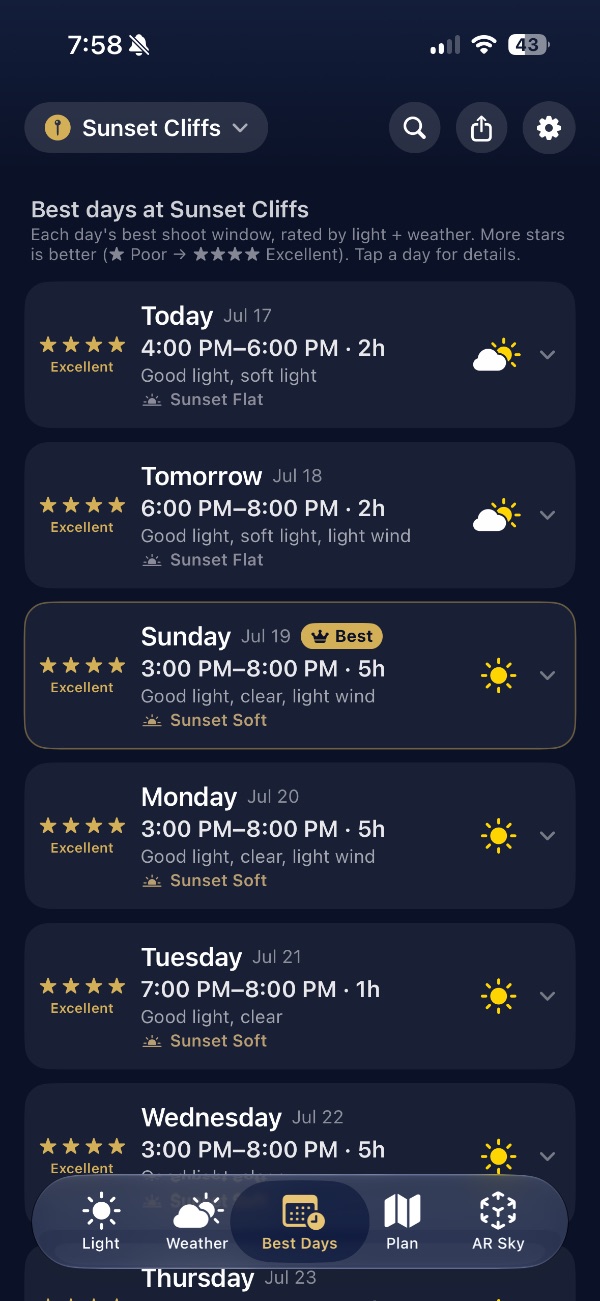
Why did it rate a clear midday as only “Good” and not “Great”?
Golden hour still scores highest: low, warm, directional light is ideal. A clear midday is a genuinely usable window, just harsher and flatter, so it rates well but not top. Overcast, on the other hand, is never rated a “Great window”; it's scored as the flat, dead light it is.